



Share on:
Facebook
LinkedIn
X (Twitter)
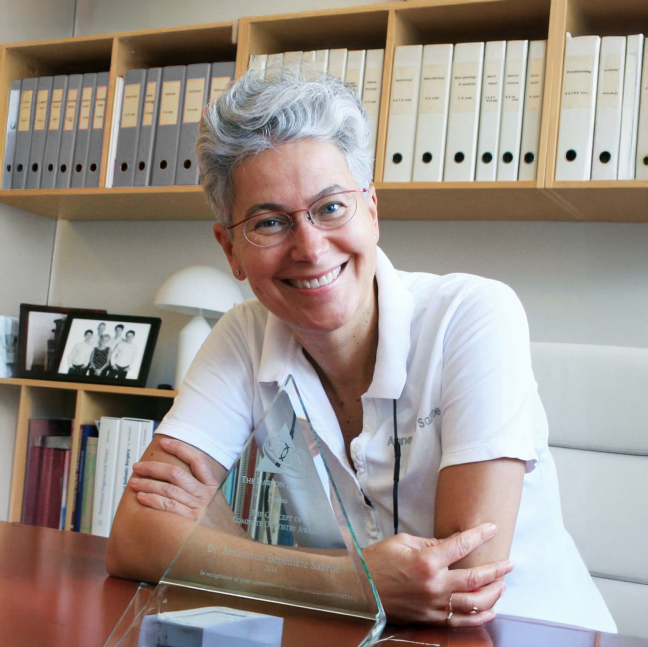
Meet Dr Sabroe, a follower of slow dentistry who is also the owner of the first iTOP Advanced certified clinic in Denmark.
Her own childhood dental trauma convinced her to study dentistry. Now Dr Annemette Sabroe has been running her own dental clinic in the Danish town of Skanderborg for 27 years. Read the interview with this experienced dentist whose clinic has an iTOP Advanced certificate and prioritises efficiency, attention to detail and a calm atmosphere in their daily work.
What was your path to dentistry? Why did you decide to study this field?
When I was an 11-year-old girl, back in 1974, I had a dental trauma that required several treatments at the dentist. I think this is the time I started to be interested in dentistry.
I graduated from the Royal Dental College in Copenhagen in 1987. After my studies I gained experience working in Lausanne, Switzerland and various different private clinics in Denmark. In 1994 I became a self-employed clinic owner.
Could you tell us more about your private clinic?
My practice is located in the town of Skanderborg in an old hospital building. Now it is used as a Health Centre networking many different healthcare practitioners, laboratory testing, diagnostic imaging center and more. At my dental practice we are five people: me – the dentist, two dental hygienists and two dental assistants. We provide all aspects of general dentistry, including endodontics.
Our main focus is on performing high-end dentistry and thereby obtaining a long-lasting relationship with our patients: “the ambassadors of the practice”.
Do you have any special plans with your practice for the future?
Next year I’ll be getting more space, so my plan is to find a brilliant new colleague to join our team. It’s important that our new colleague is the proper match and can identify himself or herself with the core values of slow dentistry: to be detail-oriented, to appreciate excellence, efficiency and attach importance to working in a calm atmosphere
What are the special features of your dental practice from your point of view?
In 2020 we were the first Danish clinic to be iTOP Advanced certified. All our patients are very interested in self-care and prevention. Our core values are a passion for esthetic restorative dentistry, balancing proper diagnostic and treatment planning in order to achieve long-term dental health and happiness for our patients.
Individually Trained Oral Prophylaxis – iTOP
iTOP is a systematic, comprehensive, hands-on programme for daily biofilm management.
It is a solution for the question how to motivate your patients to keep a good post-treatment care. iTOP Advanced course provides a deeper insight into biofilm control techniques, motivation and oral hygiene instruction for different types of the patients.
Part of iTOP seminar is hands-on training called Touch to Teach (T2T), where methods for daily biofilm management are practiced in a small group setting.
You are a member of the movement of slow dentistry. Could you explain what slow dentistry is?
Slow dentistry has four main cornerstones: awareness of the patient’s safety, understanding, well-being and comfort. This specifically includes the use of fully effective anaesthetic (if required), use of rubber dam in certain treatments to prevent cross contamination, full and appropriate disinfection of the dental unit, and fully informed and understood patient consent, explaining both risks and rewards, for each treatment.
Practicing slow dentistry is about performing high-quality dental care and having a complete focus on the patient – regardless of time. The extra time spent on each patient is well spent and offers the patient the peace of mind they often need. Slow dentistry reduces stress for everyone: the patient, me as a dentist, and the whole dental team.
Being able to offer quality dentistry is a must today – especially when you are not part of a fast-growing dental chain. We need to differentiate and be able to offer a unique service and enhance patient safety. It is not important to do more, but to do it better.
Furthermore, less mistakes occur when you take the necessary time. The teamwork at the clinic is great – we share a passion for extraordinary, meticulous dentistry, prophylaxis and great service. Slow dentistry is not only the right thing for my practice – it is also the best way for me to work in an ethical manner and the best way for me to boost my practice.
You’ve been treating patients since the 1990s. What’s the current state of oral health in your country?
The status of oral health in Denmark is in general very good. However, there is an increasing number of elderly people with chronic diseases. There is also a connection between chronic diseases and periodontitis – this requires frequent and thorough scaling and root planning at the hygienist/dentist.
The healthcare system in Denmark is not properly set up for this group of people that require extra check-ups with the dentist or dental hygienist. This group, among others, are often bound to make out-of-pocket payments for these extra visits – this has a negative impact and can also entail absence and/or unpleasant remarks. In the long-run improvements are needed, however, this is a matter of structural changes in the healthcare system so that we can be well prepared for the future.
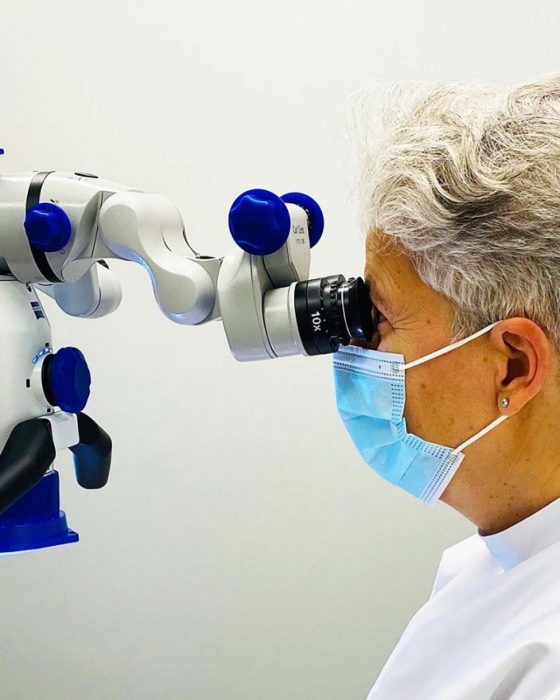
Dr Annemette Sabroe studied dentistry at The Royal Dental College in Copenhagen. After her studies she gained work experience at the Dental Polyclinic in Lausanne, Switzerland and several dental clinics in Denmark. For three years she worked as a trauma emergency dentist in Aalborg Hospital. In 1994 she founded her dental clinic – Tandklinikken in Skanderborg. She has been an external examiner at the Dental School in Aarhus and the University of Copenhagen. In 2016 she received “The Concept of Complete Dentistry Care Award”. Since 2017 she has been a fully certified Invisalign provider. She has been married for more than 30 years and is a mother of three sons.